


Pool water maintenance
Wednesday, 10 January 2024

You want to maintain pool water; there are simple steps to follow for the maintenance of your pool:
Step 1: Water balance – pH adjustment
Step 2: Disinfection
Step 3: Flocculation
Step 4: Cleaning
STEP 1 – Test and adjust the pH value of the pool water
The pH value of the water indicates whether it is acidic (soft) or basic (hard), which is crucial information for the pool operator. An unadjusted pH is particularly important for the outcome of water maintenance. Therefore, the first and most important step is always to measure and adjust the pH level, easily done with test strips.
Ideal pH value: 7.0 – 7.4
Within the ideal range, the water is neutral, optimizing the effect of adding chlorine. Simultaneously, user comfort is optimal when bathing in balanced water, as skin and mucous membrane irritations are avoided.
Too high pH value
Use pH Minus to adjust if you have hard water. A too high pH makes the water cloudy or milky and reduces the effectiveness of chlorine. Red and irritated eyes after bathing are often due to a pH value that is too low or too high.
Too low pH value
A too low pH acidifies the water and makes it aggressive to the metallic elements of the pool. In case of a too low pH value, pH Plus should be added.
STEP 2: Disinfection
The water must be clean and clear for the pool to be a safe and healthy relaxation spot. Dirt particles, spores, and bacteria are continuously added to the water from the environment, and bacteria can quickly multiply in water above 20°C. Disinfectant maintenance products help prevent this problem.
The disinfectants used are called oxidants, including chlorine-based and active oxygen (chlorine-free) products. They all need to be constantly added to the pool water.
The required amount of disinfectant varies depending on pH, temperature, and water purity. Larger doses are needed for waters with incorrect pH, warm waters, and pools exposed to strong sunlight. The same applies when the pool water is more used and contains more contaminants such as leaves, grass, sunscreen, cosmetic products, and hair.
Microorganism spores are airborne and inevitably enter the pool water. Environmental factors, such as high temperatures, a lot of rain, and intense pool activity, also influence the formation of deposits in the pool.
STEP 3: Flocculation
After a prolonged period of high temperatures, the water may appear cloudy. Very small dirt particles fall into the water and seem practically impossible to remove, for example, with a pool cleaner. In such cases, it may be necessary to add a flocculating agent that binds the small particles into larger units that can be better collected by the pool’s filtering system or a pool cleaner. In pools without a sand or glass filtering system, impurities will tend to settle at the bottom.
Although very effective, flocculant is not suitable for all types of pools and filters. Therefore, you should always check its compatibility with the characteristics of your pool, starting with the filter.
Before using a flocculant, verify its compatibility with your pool’s filter.
- The cartridge filter requires the use of a specific flocculant.
- Using a flocculant poses a risk of damaging the pocket filter.
- The diatomaceous earth filter should never be combined with a flocculant, as it may clog the filter. This type of filter is highly efficient and helps maintain crystal-clear water.
Furthermore, it is necessary to follow some instructions for successful flocculation. First, ensure that the pH of the pool water is between 7 and 7.4, and stop the pump before adding the flocculant to the pool. Then, set the filter valve to the circulation position so that water does not pass through the filter to prevent clogging. Run the pump for a few hours to properly mix the water, and stop the pump overnight to allow the agglomerated dirt to settle at the bottom of the pool. Resume filtration the next morning, restart the pump, and vacuum the bottom of the pool with the vacuum brush.
STEP 4: Cleaning and Maintenance of a Pool
Chemical maintenance of the water alone is not sufficient to keep the water fresh and inviting. It is also necessary to effectively filter the water using a pump system and remove debris from the bottom of the water as well as impurities present in the water.
Large debris, such as leaves and grass, should be removed daily from the water surface using a leaf net. The pool bottom should be regularly vacuumed, either manually or with the help of a robot. When the pool is not in use, it should be covered with a thermal cover (summer cover that keeps the water clean and warm, minimizing water evaporation) or a winter cover that “locks” the pool with a wire lock to prevent any risk of unwanted access in your absence.
Enjoy the water!
- Published in News
No Comments
Finland, well-being in nature.
Wednesday, 10 January 2024


Studies have shown for several years that nature baths help reduce anxiety, slow down heart rate, improve mood, and increase vitality.
On the occasion of the World Wellness Day last June, Finland invited travelers to connect with nature and experience its beneficial effects on the body and mind. Renowned for its landscapes adorned with vast forests, sparkling lakes, and majestic mountains, the country is an exceptional territory for well-being.
A destination even more extraordinary in the summer, as the midnight sun blankets the happiest country in the world with its golden light.
In contact with water
Throughout their history, Finns have regarded the sauna as a place of purification, where one can disconnect from the outside world and reconnect with oneself. With the country boasting 3 million saunas for 5.5 million inhabitants, Lehmonkärki Hotel stands out as a must-visit destination.
Situated on the shores of Lake Päijänne, two hours from Helsinki, the site comprises cottages and villas, featuring around ten saunas—smoke saunas, electric saunas, wood-fired saunas, igloo-shaped saunas, and those with panoramic views.
Regardless of the chosen method, the benefits for the body are well-established: elimination of toxins, stimulation of blood circulation, relief of tensions, and a tranquilized mind. To enhance these effects, it is whispered that Finns open the sauna door to head towards the waters of the lake, which warm up in the summertime, immersing themselves entirely for a “Nordic” swim.
Source : https://www.spa-de-beaute.fr
- Published in News
What is the role of maintenance?
Wednesday, 10 January 2024


The role of corrective maintenance, also known as breakdown maintenance, is to restore the normal operation of a system, machine, or equipment when a breakdown or malfunction occurs. It aims to diagnose the cause of the failure, carry out necessary repairs, and bring the element in question back to an operational state.
Corrective maintenance comes into play after a breakdown or issue has been identified. It may involve actions such as replacing faulty parts, repairing damaged elements, or resetting software. The primary goal is to minimize downtime and quickly restore the normal functionality of the equipment or system.
However, it is worth noting that corrective maintenance is generally considered less preferable than preventive or predictive maintenance. Corrective maintenance is reactive, meaning it is performed after a problem has already occurred. This can lead to higher costs associated with unexpected downtime, emergency repairs, and productivity loss. Therefore, many organizations seek to implement preventive or predictive maintenance strategies to anticipate potential issues and avoid major breakdowns.
For any requests for intervention related to the maintenance of your technical equipment, feel free to contact us:
Email: contact@cet-building.ma
Phone: 0661 90 32 23
- Published in News
AIR FILTER CLASSIFICATION
Wednesday, 10 January 2024

Classification of general ventilation filters (NF EN ISO 16890)
The classification of filters based on their efficiency is now assessed by the NF EN ISO 16890 standard, which replaced the NF EN 779 standard as of July 1, 2018.
It provides better information for professionals and the general public about the actual protection that can be expected from filters against fine particles in the air, whether taken from the outside or inside if the unit with a filter operates in recirculation mode.
Impact of Fine Particles on the Body
Our body has effective natural defenses against particles larger than 10μm. Below this threshold, air filters constitute the only effective barrier against particles that our body cannot block.

Principles of Classification
Tests are conducted on particles ranging in size from 0.3 to 10 µm to define efficiency -e- across 3 groups: PM1 (particles from 0.3 to 1 µm), PM2.5 (particles from 0.3 to 2.5 µm), and PM10 (particles from 0.3 to 10 µm).
To fall into a certain category, the filter must capture at least 50% of the corresponding particle size. If a filter captures more than 50% of PM1 particles, it is classified as an ISO ePM1 filter. If a filter captures less than 50% of PM10 particles, it is classified as a coarse ISO filter.
- ISO ePM1 > ePM1, minimum ≥ 50%
- ISO ePM2,5 > ePM2,5, minimum ≥ 50%
- ISO ePM10 > ePM10 ≥ 50%
- ISO grossier > ePM10 ≤ 50%, Classification based on initial capture.
Correspondence between NF EN 779 and NF EN ISO 16890
| EN 779 | ISO 16890 | |||
| Classes | ePM1 | ePM2,5 | ePM10 | ISO Grossier |
| G3 | – | – | – | ≥ 80% |
| G4 | – | – | – | ≥ 90% |
| M5 | – | – | ≥ 50% | |
| M6 | – | ≥ 50-65% | ≥ 60% | |
| F7 | ≥ 50-65% | ≥ 65-80% | ≥ 85% | |
| F8 | ≥ 65-80% | ≥ 80% | ≥ 90% | |
| F9 | ≥ 80% | ≥ 95% | ≥ 95% | – |
Classification of Absolute Filters (NF EN 1822-2019)
Principles of Classification
Very high-efficiency air filters with very low penetration, used in the field of ventilation and air conditioning, as well as in technical processes, such as applications in cleanroom technology or the pharmaceutical industry, are classified in Europe according to this standard.
The standard defines 3 classes:
- Group E: EPA filters (Efficient Particulate Air filters | Efficient Air filters)
- Group H: HEPA filters (High-Efficiency Particulate Air filters | High-Efficiency Air filters)
- Group U: ULPA filters (Ultra-Low Penetration Air filters | Very Low Penetration Air filters)
Absolute filters block at least 85% of the most penetrating particles (MPPS) with sizes ranging from 0.1 to 0.3 μm.
The classification indicates the percentage of MPPS particles retained, ranging from > 85% (class E10) to > 99.999995% (class U17).
- Published in News
La 11ème édition de Solaire Expo Maroc, se tiendra du 21 au 23 Février 2023 à Casablanca, Parc d’Expositions Office des Changes.
Wednesday, 10 January 2024
Le Salon SOLAIRE EXPO MAROC, le plus grand événement consacré à l’énergie solaire et l’efficacité énergétique au Maroc, se tiendra cette année du 21 au 23 Février 2023, sous le Haut Patronage de Sa Majesté le Roi Mohammed VI que Dieu le glorifie.
Ce Salon est l’évènement de référence pour la technologie solaire et l’un des salons les plus importants de son genre sur l’échelle nationale et internationale.
Cette édition aura lieu au Parc d’Expositions Office des Changes à Casablanca.
Toutes les informations sur le site : https://solaireexpomaroc.com/
- Published in News
AC & DC Motors | What’s the difference?
Wednesday, 10 January 2024

AC motors (asynchronous motors) and DC motors (synchronous motors) are two very popular models of electric motors, but what sets them apart?
Here is a comparison of AC motors and DC motors to help you better understand and distinguish between them.

An AC motor operates on alternating current. Alternating current flows in one direction and then the other. It is measured in hertz (Hz), representing the number of changes in current direction per second. AC is commonly used for electricity distribution due to its limited intensity and reduced heat loss compared to direct current.
A DC motor is powered by direct current. Direct current flows in only one direction (from the negative pole to the positive pole) and is generated by a source such as a battery, cell, or photovoltaic solar panels. It is occasionally used for electricity transmission but typically over very long distances.
The speed variation
Varied speed control of an electric motor is essential for certain domestic or industrial processes. However, the speed of motors is mostly constant in the majority of cases. Speed variation becomes interesting to transform the operation of the motor and the driven machine.
The rotational speed of a motor allows the conversion of electrical energy into mechanical motion. It depends on the motor’s construction, the type of power supply, and slip.
There are 3 techniques to vary the speed of an asynchronous electric motor:
- Increasing or decreasing the number of pole pairs (during construction);
- Adjusting the frequency of the power supply;
- Manipulating the slip of the motor (for slip-ring motors).
To vary the frequency of an AC electric motor, there are several solutions, but the most common and straightforward method is to adjust the supply frequency using a frequency converter. AC motors are preferably used in cases where speed variability does not require high precision. They are perfect for constant speed applications with minimal speed changes.
For a DC motor, it’s the variation in voltage that will modify the motor’s rotational speed. Speed variation is achievable here without additional equipment and very precisely.
Le moteur AC, conçu pour un usage intensif
The AC motor is a robust motor with a long lifespan, requiring minimal maintenance and offering an excellent cost-to-performance ratio. It is also energy-efficient.
The DC motor, a high-precision motor
The DC motor is a precise and fast-responsive motor (quick start/stop/acceleration). Additionally, it is perfect for applications requiring a high starting torque.
No three-phase motor for the DC motor
The DC motor is available only in single-phase, whereas the AC motor can be found in both single-phase and three-phase configurations. Today, DC motors are fading in favor of AC motors with frequency inverters. DC motor parts are indeed expensive and hard to find, while AC motors are offered at a more affordable price and require minimal maintenance.
- Published in News
FM200 System | What is it?
Wednesday, 10 January 2024


The FM200 fire extinguishing system is a registered trademark of Dupont and also known as HFC-227ea [heptafluoropropane]. It is a clean halocarbon agent, which is waterless, non-explosive, non-flammable, odorless, and a clear liquefied gas, pressurized and used as a ‘fire extinguishing agent,’ classified for Class A, B, and C fires, providing a total flooding solution. It was introduced in 1993, replacing halon, which was banned due to its impact on ozone depletion and its contribution to severe climate change under the Montreal Protocol on Substances that Deplete the Ozone Layer.
Where can FM200 be used?
The automatic FM200 extinguishing system is used in several areas, primarily for automatic fire protection in the following areas :
- Data Centers
- Server Rooms
- Telecom Rooms
- UPS Rooms
- Switch Rooms
- Fuel Pump Rooms
- Libraries
- Museums
- Medical Facilities
- Industrial Applications
- Paint Booths
What does “Agent propre” (Clean Agent) mean?
A clean agent is described by NFPA 2001 as a volatile or gaseous extinguishing agent that is electrically non-conductive and leaves no residue upon evaporation.
Clean Agent FM200 vs. Water-Based System?
If we examine the types of areas these systems protect, the primary reason for using a clean agent suppression system is that during any discharge, whether accidental or intentional, there is limited risk of damage to the equipment and protected space. It is electrically non-conductive and leaves no residue, water, or corrosive materials.
The clean agent can be removed and cleaned from the space through simple ventilation.
In contrast, with a water-based system, water damage would typically be incurred, and it is much slower to react, resulting in increased business downtime, damage to equipment/materials/assets, and higher repair costs after a fire.
What are the different nomenclatures used for FM200 gas?
The most common name is obviously FM200, but there are others, such as:
- FM-200
- HFC-227a
- 1,1,1,2,3,3,3-Heptafluoropropane
- Heptafluoropropane
How does it work?
FM200 is designed to be maintained in the form of compressed liquefied gas in the bottle/cylinder. Once discharged into the piping and nozzles, it will change state to vapor due to its low boiling point, where it will absorb heat from the space.
As a fire requires three things to start—fuel, oxygen, and heat—eliminating the heat prevents it from igniting.
According to NFPA 2001, once a fire has been detected and FM200 has been released, it must discharge completely into the space, with a maximum allowed discharge time of 10 seconds, including extinguishing the fire [30 seconds for any inert gas]. Part of the design calculation involves determining the required height/depth at which the gas must be suspended, for example, at 2.2 meters above the finished floor, to fully protect the combustible space. The gas must maintain this height for at least 15 minutes.
Components of the FM200 Fire Suppression System.
The HFC227ea fire suppression system consists of two parts: a “mechanical” part and an “electrical” part.
Although the system seems quite simple, there are quite a few components that will be necessary to ensure that it works and functions correctly.
The mechanical components include the pipe, fittings, cylinder bracket, agent cylinder, HFC227ea agent, cylinder bracket, nozzle, discharge valve head, liquid level indicator, pneumatic actuator, pressure gauge, manifold, check valve, and signaling.
The electrical components include the fire extinguishing control panel, detector, manual release station, abort switch, electric actuator, low-pressure switch, discharge pressure switch, audible and visual notification devices, main reserve switch, auto-manual switch, and other fire safety control interfaces.
FM-200 Advantages & Disadvantages
– Advantages:
- Fast Action,
- Minimal Facility Downtime,
- Smaller Quantity of Agent Required Compared to Inert Gases, Meaning Less Storage Space Required,
- Easy to Install,
- Easy to Commission,
- Clean – Leaves No Residue on Sensitive Equipment such as Servers and Electronic Devices,
- Designed to Be Safe and Non-Toxic.
Disadvantages :
- Expensive compared to a water-based system,
- Designed for a complete flooding of the space to be protected, thus requiring a complete replacement of the bottles,
- The network and components through which the gas is discharged must withstand high pressure, requiring special structures and facilities.
- Health and safety considerations for installation,
- Not entirely environmentally friendly and contributes partially to climate change, much like HFC.
Clean Agent Standards:
The most common standard for fire suppression using a clean agent gas is NFPA 2001 – Standard on Clean Agent Fire Extinguishing.
The standard covers design, installation, testing, inspection, approval, operation, and maintenance requirements for systems.
Is FM200 banned?
No, FM200 is not banned. There is sometimes confusion with Halon, which, in early 1992, was ordered that no new Halon manufacturing would be allowed from 1994 onward under the Montreal Protocol on Substances that Deplete the Ozone Layer. This was due to its environmental impact on the ozone layer. FM200 has become one of the leading global substitutes for Halon in fire suppression gases and clean agents.
Is FM200 dangerous?
FM200 poses no toxic danger according to the assessment method of the U.S. Environmental Protection Agency (US-EPA). However, it should be noted that the vapors are heavier than air and can cause suffocation by reducing oxygen levels. Improper use or intentional inhalation abuse can lead to death without warning symptoms, due to cardiac effects.
What are the other fire suppression gases?
While FM-200 is the most common, it is not the only option when it comes to using a clean agent for fire suppression. Other available gases include:
- Novec 1230 [Halocarbon]
- Inergen [Inert Gas]
- Nitrogen [Inert Gas]
- Argonite [Inert Gas]
- Published in News
Piscina & Wellness Exhibition, from November 27 to 30, 2023 (Barcelona).
Wednesday, 10 January 2024

The Piscina & Wellness Exhibition in Barcelona is the must-attend event for professionals in the field of aquatic activities and wellness in Spain.
This exhibition is the benchmark event for market innovations and the latest developments in the field of pools and wellness.
This edition will take place from November 27 to 30.
All information on the website: https://www.piscinawellness.com/
- Published in News
SIAM 2023 – International Agriculture Exhibition in Morocco
Wednesday, 10 January 2024

Under the High Patronage of His Majesty King Mohammed VI
The 15th edition of the International Agriculture Exhibition in Morocco will take place in the imperial city of Meknes from May 2 to May 7, 2023.
Toutes les informations sur le site : https://www.salon-agriculture.ma/
- Published in News
The Essential Oils in Olfaction, how does it work?
Wednesday, 10 January 2024
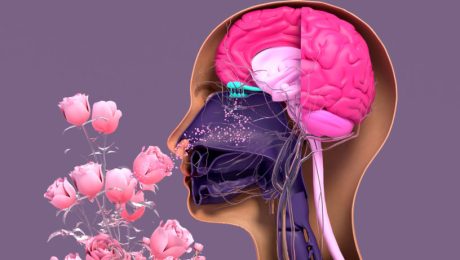
Françoise Couic-Marinier, Doctor of Pharmacy, and Marion Lemain, Physiotherapist, share their insights on the mechanisms of olfaction.
Have you ever experienced smelling an aroma that immediately transported you back years, right into the heart of a childhood memory? Do you recall those sensations and the immediate emotional connection to that olfactory memory?
The perception of an odor depends on the moment of its encoding, psychological and emotional context, as well as each individual’s personal experiences. There is a secondary alert system, known as the trigeminal system, which independently detects the freshness, pungency, or irritation of an odor, irrespective of the main olfactory system. In case of a malfunction in the olfactory system, the trigeminal system preserves the individual’s overall integrity.
The Mechanisms of Olfaction
Olfaction, the second sense to develop after touch, is defined at 3 months of pregnancy in the mother’s womb. As a result, the child incorporates into “their olfactory library” everything the mother eats and the smells she breathes, considering them as their own.
It was Richard Axel and Linda Buck, two American researchers who addressed the question of the olfactory mechanism, earning them the Nobel Prize in Medicine. This mechanism involves the functioning of nose cells that transmit odor information to the brain. In 1991, their work demonstrated the molecular identity of olfactory receptors, a vast family of thousands of genes enabling the distinction of numerous different odors. Each receptor is dedicated to a specific odor and is activated by molecular characteristics.
The lifespan of olfactory cells is approximately 45 days. Like amniotic fluid, they are located at the top of the nasal cavities and function in a liquid environment. Once the odor molecules are perceived by the receptors, the information is transmitted to the olfactory bulb and then to the primary olfactory cortex. The olfaction mechanism is an almost direct pathway to our unconscious mind!
Remarkable Studies:
In France, prominent neuroscientists like Luc Marlier, working at the CNRS in Strasbourg, have presented truly astounding results through their research on olfaction mechanisms and the invisible bonds that connect us to one another.
For instance, exposing a 2-hour-old infant to the smell of rancid butter immediately elicits a negative reaction. Conversely, letting the same infant smell vanilla extract or the scent of strawberries prompts them to open their eyes, flare their nostrils, stick out their tongue, and reach their hand towards the source of the smell, attempting to bring it closer to their mouth. Furthermore, it seems that maternal preferences can influence those of the child.
These remarkable findings contribute to significant advancements in the treatment of prematurely born or extremely premature infants (born before 7 months of pregnancy). Dispersing invisible vanilla extract in the incubator helps alleviate sleep apneas. In addition to the treatment, vanilla stimulates their olfactory and gustatory pleasure. Infants surrounded by this imperceptible fragrance regulate their heart rate, sleep better without the need for caffeine, eat more efficiently, and are discharged an average of 3 weeks earlier than other similarly premature infants treated with caffeine.
The Essential Oils and Their Physical and Emotional Impact through Inhalation
The Essential Oils and Their Impact
When our body experiences imbalance caused by stress, aging, or any specific health condition, inhalation is a highly effective method that directly affects the respiratory pathways. The potent compounds in Essential Oils release aromas that instantly send signals to the brain, particularly to the unconscious mind where emotions reside.
In the case of stress(1)
Some Essential Oils have properties that can reduce heart rate and blood pressure in adults. As a result, they are used by physicians and nurse anesthetists to prevent and alleviate the stress of patients about to undergo anesthesia. This significantly reduces the doses of injected anesthetics or other tranquilizers.
- 10 minutes of inhalation with Marjoram Essential Oil.
For elderly individuals.(2)
The inhalation of Essential Oils and other everyday scents can revive memories and stimulate the memory of a person with Alzheimer’s. Thanks to them, we directly connect with these memories, fostering communication and interactions. This ritualizes life moments in institutional settings.
Feeding Behavior Disorders and Depression(3)
Frequently employed as a support to conventional treatments, these scents stimulate and regulate the appetite of young anorexic or bulimic patients before their meals, restoring olfactory pleasure to depressed individuals who can no longer distinguish between the scent of a rose and that of vomit. These are just a few of the brilliant protocols implemented and used daily in our hospitals.
For athletes
For athletes, in addition to stress management, the pursuit of performance becomes crucial. The mental aspect plays a pivotal role in achieving the perfect movement or endurance. Nothing supports this better than Noble Laurel Essential Oil! Boosting self-confidence and enabling the tapping into necessary resources.
Moreover, Eucalyptus Radiata Essential Oil is effective in increasing concentration and memorization capabilities. On the other hand, Peppermint Oil can also be used as a stimulant and invigorator.
What about COVID?
The COVID-19 virus has highlighted a sense that has been underestimated for too long – the sense of smell. Indeed, during this viral infection, the olfactory system is disrupted, leading to anosmias (loss of smell), hyposmias (decreased perceptions), and phantosmias (constant phantom odors). Changes in smell can last from 15 days to several months. Edema of the olfactory epithelium prevents odor molecules from reaching the sensory cells. Nevertheless, the system is generally not completely destroyed.
This raises the question:
- issues related to eating problems, as only the taste buds then transmit information: sour, sweet, salty, bitter, and umami (monosodium glutamate).
- social handicaps: loss of alerts, smells of danger (smoke), anxieties about body odors…
- psycho-emotional issues: depression, detachment from the environment, and loss of reference points.
Olfactory Rehabilitation Protocol
Developed by the Anosmie.org association, Hirac GURDEN, and Jean Michel MAILLARD, you can download it directly from the association’s website.
Can I provide you with a summary?
The rehabilitation takes place over 12 weeks, with twice-daily sessions of 5-minute olfactory stimulation. It is recommended to use 4 to 6 scents, mostly from Essential Oils. An olfactory sensitivity test in an Ear, Nose, and Throat (ENT) department and a consultation before and after rehabilitation may be considered to assess the results objectively.
Which Essential Oils to use?
These authors of the protocol have chosen these Essential Oils for their differences and characteristics that are unique to them:
- The Essential Oil of Lemon (Citrus limon)
- The Essential Oil of Clove (Eugenia caryophyllus)
- The Essential Oil of Rose (Rosa or geranium)
- The Essential Oil of Eucalyptus globulus
- The Essential Oil of Peppermint (Mentha piperata)
- The scent of coffee beans
Equipment to use :
- A tracking notebook to fill in after each olfaction.
- 6 identical opaque glass bottles of 100 ml each containing Essential Oils diluted to 2% in 50 ml of water. Approximately 20 drops for 50 ml of water. Essential Oils are not soluble in water, and the scent of carrier oils may disrupt the effectiveness of the treatment. Therefore, shake the bottles before each use. Store your bottles away from light and heat for a duration of 15 days.
- Labels to identify the bottles. To be stuck under the bottles so that they are not identifiable during olfaction.
How to proceed ?
- Setup:
- Settle comfortably in a quiet space, away from meals and toothbrushing, in a neutral room without olfactory disturbances: Avoid kitchen smells and scented candles.
- Breathe:
- Place the bottle about 2 centimeters below the nose for 30 seconds, sweeping it from left to right to allow the odor molecules to diffuse through the nostrils.
- « Breathe consciously, seek calmness, and let the perception come. ».
- No stress! There’s no need to identify the scents; the goal is simply to detect them.
- Take a break between each bottle.
- Position your bottles :
- Smell the bottles randomly, one after the other, then place them based on your perceptions. On the left, certainty of having detected a scent, in the middle, uncertainties, and on the right, no sensation. Record in your tracking notebook.
- You can later smell again the bottles in which you perceived a sensation, associating this time the image and the source of its origin. This will help you to fix them in your « olfactory library ».
So now, don’t hesitate! Smell and feel!
(1) Jacques MARCHAND, The use of aromatherapy in the treatment of stress and insomnia. Doctoral thesis, Faculty of Lorraine (2019)
(2) Article Plantes & Vie (April 2019) – Françoise Couic-Marinier ‘Alzheimer, don’t let your neurons fly away’
(3) Van der Ploeg et al. BMC Geriatrics (2010) / http://www.biomedcentral.com/1471-2318/10/49“
- Published in News
- 1
- 2